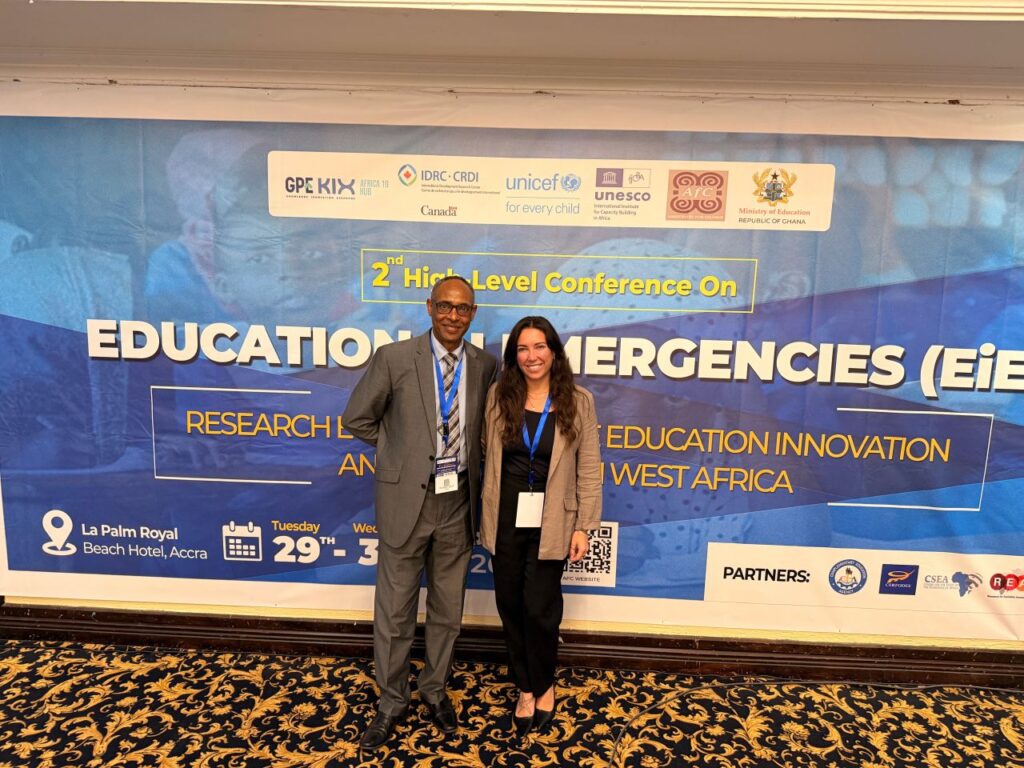
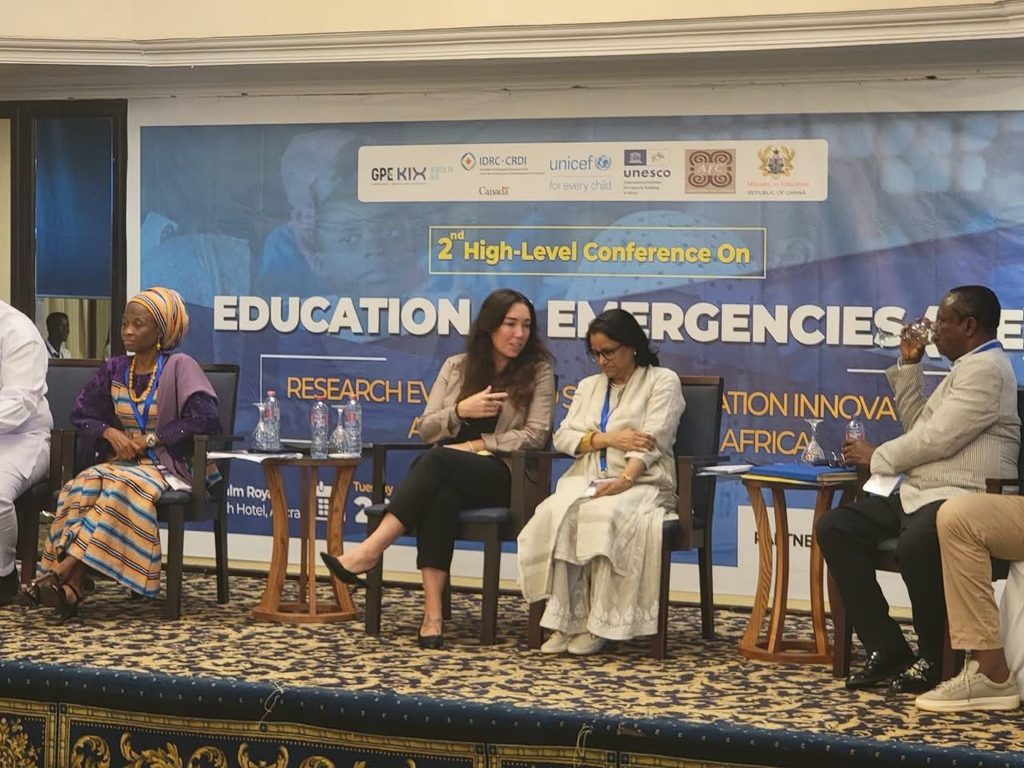
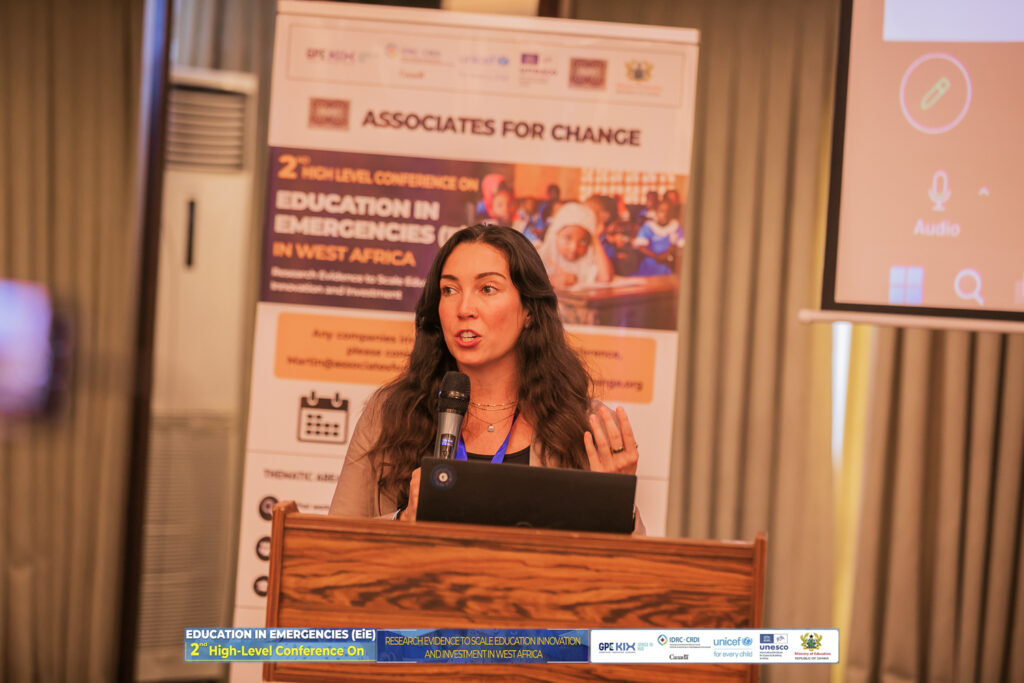
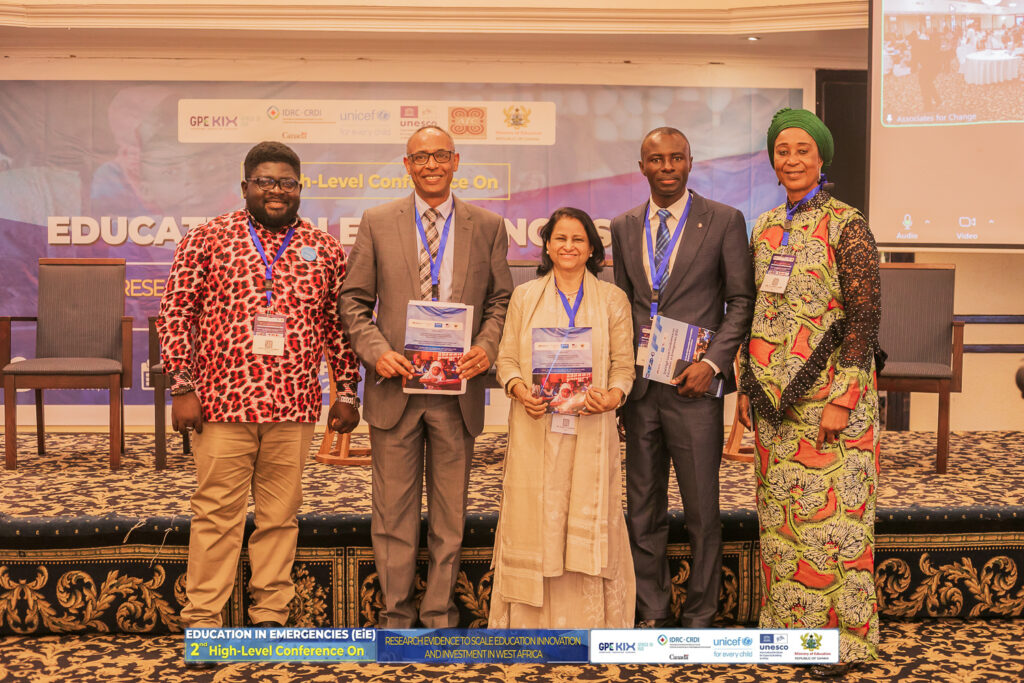
I attended the conference to share Geneva Global’s experience with government adoption and sustainability pathways for Accelerated Education Programs (AEPs), drawing on our experience with Speed School in Ethiopia and Uganda. The key lesson I offered is that there is no single pathway to government adoption and scale. Through our work on Speed School, we have seen that different contexts and conditions require different approaches, and meaningful systems change rarely follows a predictable or linear path.
I concluded with a related idea about what sustainability ultimately means in the case of accelerated education programs such as Speed School. I suggested that perhaps the goal should not be to build the largest program possible but rather to strengthen the overall education system so that fewer children need accelerated education in the first place.
When it comes to Geneva Global’s Speed School program, the most important legacy may not be the program itself but the extent to which its methods, practices, and lessons become embedded within the broader education system.
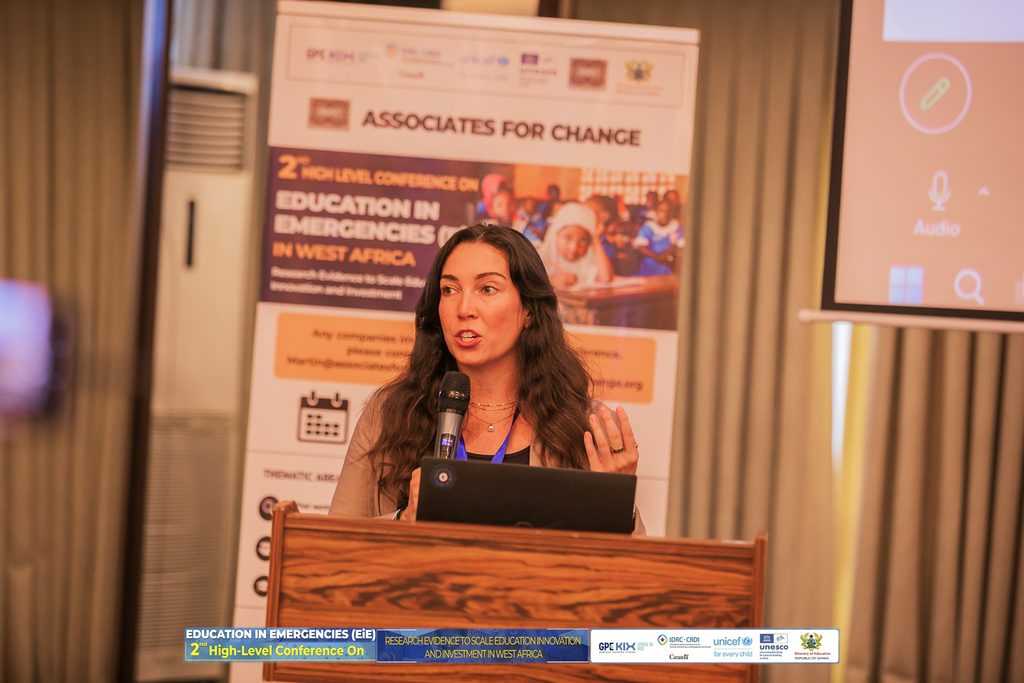
My presentation was just one of many perspectives shared throughout the conference. Across keynote addresses, presentations, panel discussions, and working groups, participants explored the goals of program or project scale and sustainability from different angles, with particular attention to emergency and crisis settings. As those discussions unfolded, I found myself revisiting my own presentation topic from a different perspective. Rather than asking how programs reach scale, I began wondering how they withstand disruption.
One of the remarks that stayed with me came from my colleague, Dr. Samuel Wollie, former Geneva Global Ethiopia Country Director and current Senior Advisor, who attended the conference as a representative of the INEE Accelerated Education Working Group. In his opening address, Samuel challenged participants to think differently about preparedness in education:
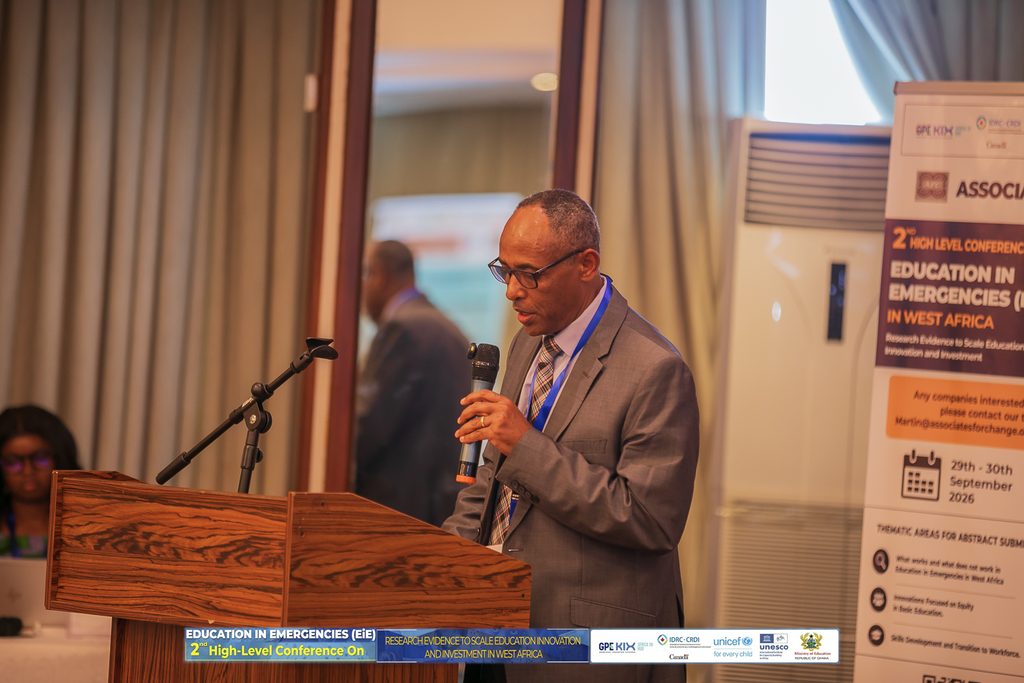
“We cannot wait for a crisis to happen and then ask, ‘What are we going to do about education?’ Governments and partners need plans and programs in place before a crisis. They must establish programs, tools, partnerships, and systems that can be activated quickly within a learning loss framework or recovery plan.”
Samuel’s comments capture a broader theme that surfaced repeatedly throughout the conference: effective responses in moments of crisis depend heavily on what governments and partners have put in place beforehand. His remarks prompted me to think back to moments in Geneva Global’s history that had tested this idea.
The first was in Uganda, occurring during my early years with Geneva Global.
In January 2020, Geneva Global Uganda launched a new implementation strategy for Speed School that represented an important step in our journey toward government ownership. From our launch in 2016 until 2019, Speed Schools were implemented by local civil society partners. Under the new approach, government structures would begin directly implementing Speed School classes in five districts, helping orient and strengthen the leadership and capacity of government stakeholders to operate AEP classes through direct implementation experience and continuing professional development.
Classes opened in February, but schools closed just a few weeks later due to COVID-19. They remained closed for two full school years! Almost overnight, our focus shifted from integrating Speed School into government systems to ensuring children could continue learning while schools remained closed. The result was the first iteration of what would eventually become known as Home-Based Instruction (HBI). Working with our district education counterparts, Geneva Global established “learning pods” in communities so that children could continue learning despite the prolonged school closures. The approach emerged as a practical response to an immediate challenge, but looking back, it also revealed something important about sustainability.
At the time schools closed, government actors had only recently completed their initial training on the Speed School model and methods. Had Geneva Global needed to step away entirely, knowledge of Speed School implementation would have remained concentrated among a relatively small number of civil society actors. Government partners were only beginning to learn the model and would not yet have been positioned to lead implementation independently once schools reopened, precisely when accelerated education would be most relevant. This experience strengthened Geneva Global Uganda’s commitment to intentionally transferring knowledge, building capacity, and ensuring that government actors were not simply supporting implementation but leading it.
The pandemic offered an early test in Uganda of many of the ideas we were discussing in Accra. The experience raised an important question: if learning is to continue during crisis, what needs to be in place before that crisis occurs? In Uganda, we had a proven model, a highly functioning network of education leaders and experts founded on shared responsibility and trust along with a set of strategies and support materials that we could repurpose to the shocking new implementation scenario. Yet, we had not yet ensured the know-how within government systems to perpetuate and replicate the distinct aspects of the model fully. Following the pandemic, system strengthening became our greatest priority and an accomplishment for which we now take great pride.
Ethiopia offers a much larger test of that question.
Since the outbreak of conflict in Ethiopia in November 2020, more than 9 million children are out of school and over 10,000 schools have been damaged or destroyed in what has been called one of the world’s worst education crises (UNICEF, 2024). Yet amid these challenges, Ethiopia’s implementation of its AEP has continued to expand, a testament to the Ethiopian government’s commitment to bringing out of school children and youth back to education.
That resilience did not emerge during the crisis itself. It was built through the early investments the Ethiopian government had made in accelerated education, inspired by Speed School and supported greatly by Geneva Global. For several years before the current conflict, the Federal Ministry of Education and Regional Education Bureaus had already invested in the systems required to scale its AEP. Through policy inclusion, dedicated AEP Units at the federal and regional levels, government financing, and years of partnership, accelerated education had become increasingly integrated into government education planning and delivery. At a moment when accelerated education was arguably needed more than ever, years of preparation helped ensure that implementation could continue rather than giving way entirely to competing emergency priorities.
However, rather than expecting the conventional model to drive the same results as before the conflict, both Geneva Global Ethiopia and the government embraced adaptation. When schools reopened in Tigray in 2023 after years of closure due to the disruption, the region realized that accelerating education was an imperative not just for children who had never attended school or dropped out early. Rather, children of all ages and all grade levels needed to speed up their learning to get back on track. So, the experience of accelerating education to ready children aged 9 to 14 to join their age peers in Grade 4 adapted to serve children and youth across all of primary and secondary schooling.
It was also clear that recovery required more than simply resuming instruction. Teachers and students alike had experienced trauma. This led to the integration of Mental Health and Psychosocial Support (MHPSS) into teacher training and classroom practice. Teachers were engaged not only as implementers of a program, but as individuals processing their own experiences of conflict and trauma. Efforts focused on helping educators address their own wellbeing while equipping them with trauma-informed approaches that could support students in their classrooms. What began as part of the recovery process in Tigray has since become integrated into teacher training for all Speed School classes across the country.
More recently, another adaptation has emerged. In preparing for the 2025-26 Speed School program in Ethiopia, it became clear that conflict had left many communities in Amhara without functioning schools. Millions of school-aged children remain unable to access formal education because their schools had been damaged, destroyed, or repurposed during the conflict. Working alongside the Regional Education Bureau, Bahir Dar University, and two of our long-standing NGO partners – DANFE and ADA – Geneva Global adapted the Home-Based Instruction (HBI) approach first piloted in Uganda during COVID-19 school closures. Last year, 70 learning pods serving 560 children provided formal opportunities to learn in locations where traditional schooling is not currently possible. As the initiative now moves into its second year, the partners are refining the HBI implementation guides and tools, gathering additional and deeper evidence, and discussing how the region might scale the model to reach more children whose education has been disrupted by conflict.
The experiences in Uganda and Ethiopia demonstrate that even well-established, evidence-based approaches must evolve as circumstances change. In moments of crisis, the needs of learners, teachers, and communities can shift dramatically, and approaches that worked in one context or at one point in time may no longer be sufficient in another. Under those circumstances, learning continues when teachers, local leaders, government officials, and communities are prepared to adapt.
Perhaps, then, sustainability requires us to think beyond whether an innovation itself reaches scale and endures permanently. What matters just as much, and likely more, is whether the knowledge, capacity, relationships, and systems built around it are strong enough to respond when circumstances change and make appropriate changes to the original model.
While attending the conference, we received news of increased violence in Ethiopia. It was difficult news to hear, particularly alongside Ethiopian colleagues whose families and communities continue to be affected by instability. Yet, I found myself considering our path forward with more confidence than I may have before attending this conference. Together with our government colleagues, we are ready to make the required adjustments to help children and their families maintain the hope that formal education permits them to have.
The experience of the past six years has shown what preparedness can look like in practice. Systems built years earlier have not prevented crisis or disruption, but they have created a foundation from which educators, communities, government institutions, and partners can continue to respond and adapt.
When I arrived in Accra, I expected to spend most of my time thinking about scale and government adoption, but I left thinking about a more fundamental question: What does it take for an education system to keep serving children when circumstances change? Ultimately, sustainability is not measured solely by whether a program is adopted by a government but by whether the commitment, capacity, and systems behind it are strong enough to persevere and adapt when tested, ensuring that children can continue learning even in moments of crisis.