
On 21 November, the second-round graduation ceremony of the PROSPECT 2 Multi-Agencies Program, under the Learning to Earning initiative, celebrated 73 graduates who successfully completed vocational skills training at Jigjiga Polytechnic College.
The graduates comprise 35 refugees, 24 youth from host community, and 14 secondary school students. Among the graduates are 31 young women and 42 young men, reflecting the program’s commitment to expanding inclusive skills development and livelihood opportunities across communities.
Through the training, participants acquired practical, market-oriented skills in five vocational fields: automotive/Bajaj maintenance, plumbing, electrical installation, tailoring and garment production, and food preparation, and hotel and tourism. These skills provide graduates with a foundation to pursue employment, establish small businesses, and work towards greater self-reliance.
The graduation ceremony brought together key stakeholders, including representatives from the Regional Education Bureau, Regional Skills and Job Creation Bureau, UNICEF, Regional Refugee and Returnee Service (RRS), UNHCR, and Geneva Global Ethiopia, reaffirming a shared commitment to advancing skills development and economic inclusion.
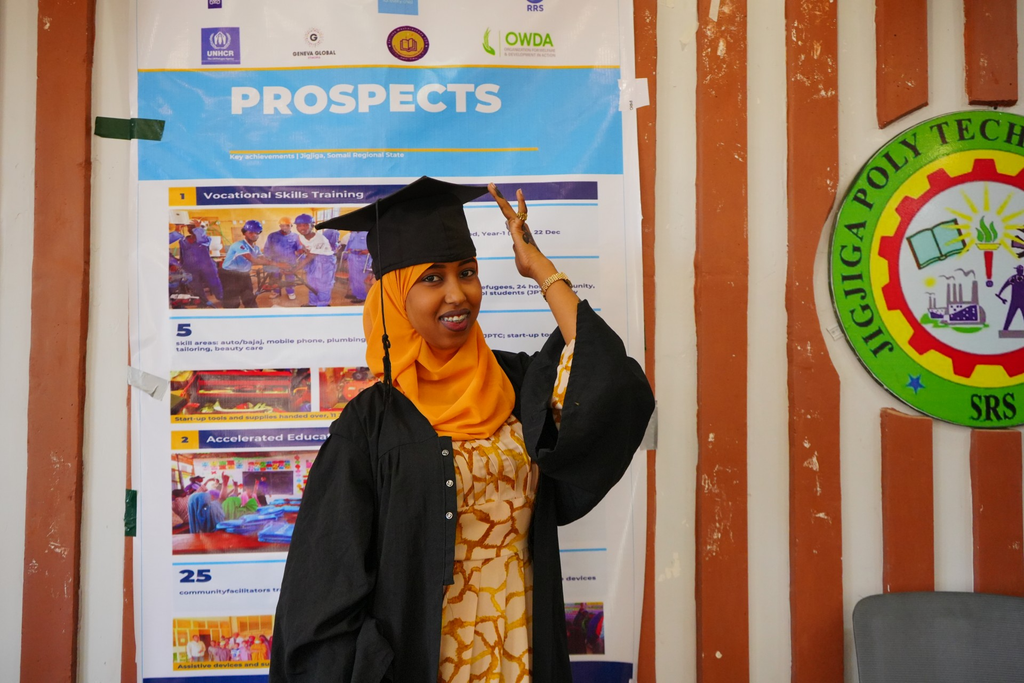
Rahma Seid is among the graduates recognized for her outstanding performance. She is from the host community in Kebribeyah. She specialized in tailoring and garment production. When asked about her experience, Rahma said, “The training was very interesting, and I am happy and grateful to have graduated. I hope to receive financial and equipment support that will help me put my newly acquired skills into practice and join the workforce. I encourage women and girls to seek skills training opportunities that can increase their chances of employment rather than staying at home.”
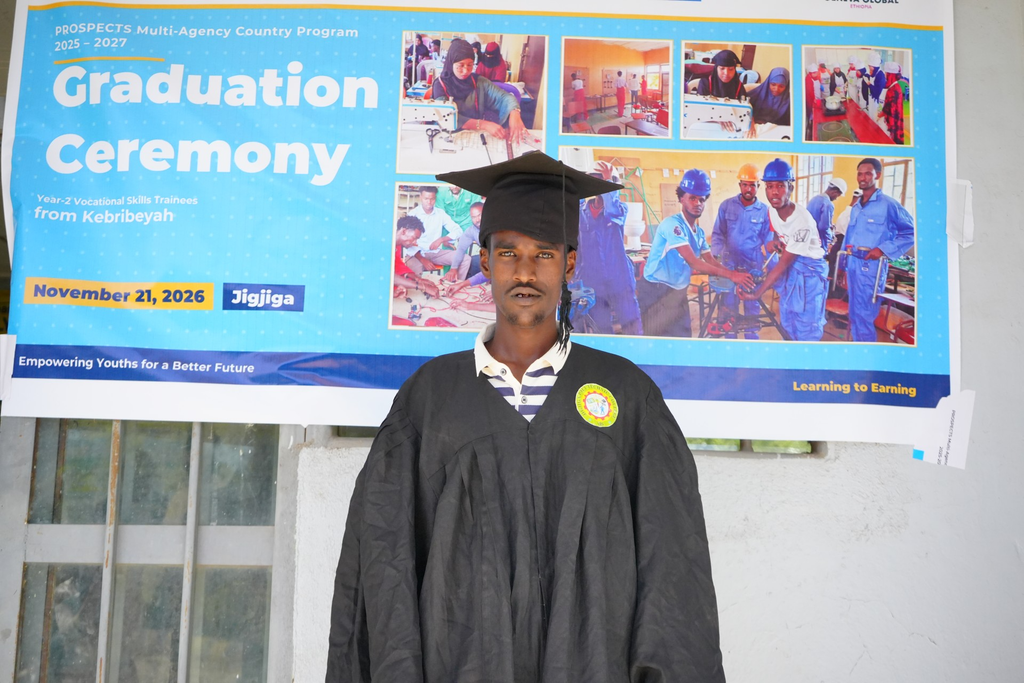
For Kader Mohamed Mohamud, one of the 35 refugee graduates from Kebribeyah who specialized in automotive/Bajaj maintenance, the next step is entrepreneurship. “I am ready to establish a small enterprise and work alongside my teammates. I want to turn the skills I have gained through this training into meaningful and fulfilling work and start earning,” he said.
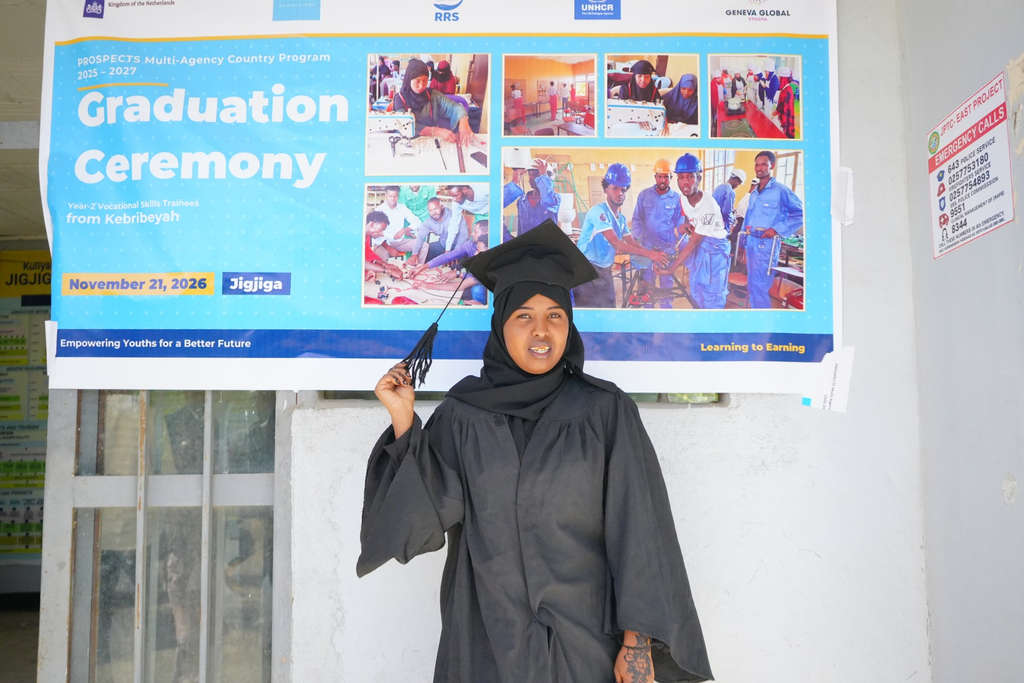
Similarly, Hamda Nur Mahamed, a refugee graduate who specialized in food preparation and hotel and tourism, is already looking ahead to building a future in the hospitality sector. “In the future, I want to work in the hotel and tourism industry. As I take my first steps into the workforce, I hope to establish a small business or enterprise together with my friends,” she shared.
Their aspirations reflect the purpose of the Learning to Earning initiative: going beyond skills acquisition to create pathways towards meaningful employment, entrepreneurship, and sustainable livelihoods for refugees and host communities.