
West Wollega – Every morning, as sunlight spills across the hills of Lomicha Dullo kebele, a 12‑year‑old Zelalem Jigi slips into his small classroom at Igu Kommis Primary School. His notebooks are neatly stacked, and his once‑injured left hand now grips a pencil with careful determination. Just a year ago, none of this seemed possible.
For most of his childhood, Zelalem’s world revolved around cattle herding. In communities like his, where conflict has disrupted livelihoods and deepened poverty, many children take on work at a young age to help support their families. For these children, education is often interrupted or out of reach, as survival must come first. Like many of his peers, Zelalem began working and it was during this work that the injury occurred.
For Zelalem, school was a distant dream; his parents couldn’t afford the basic supplies, and survival always came first. Though he briefly enrolled in Grade 1, financial hardship forced him to drop out again.
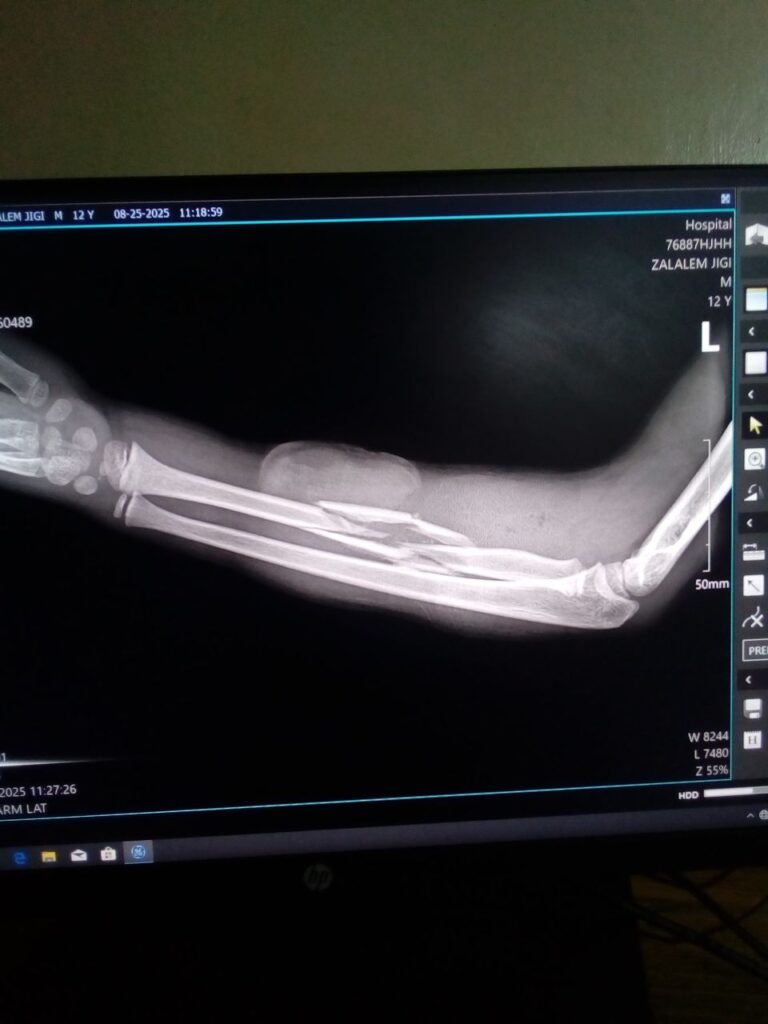
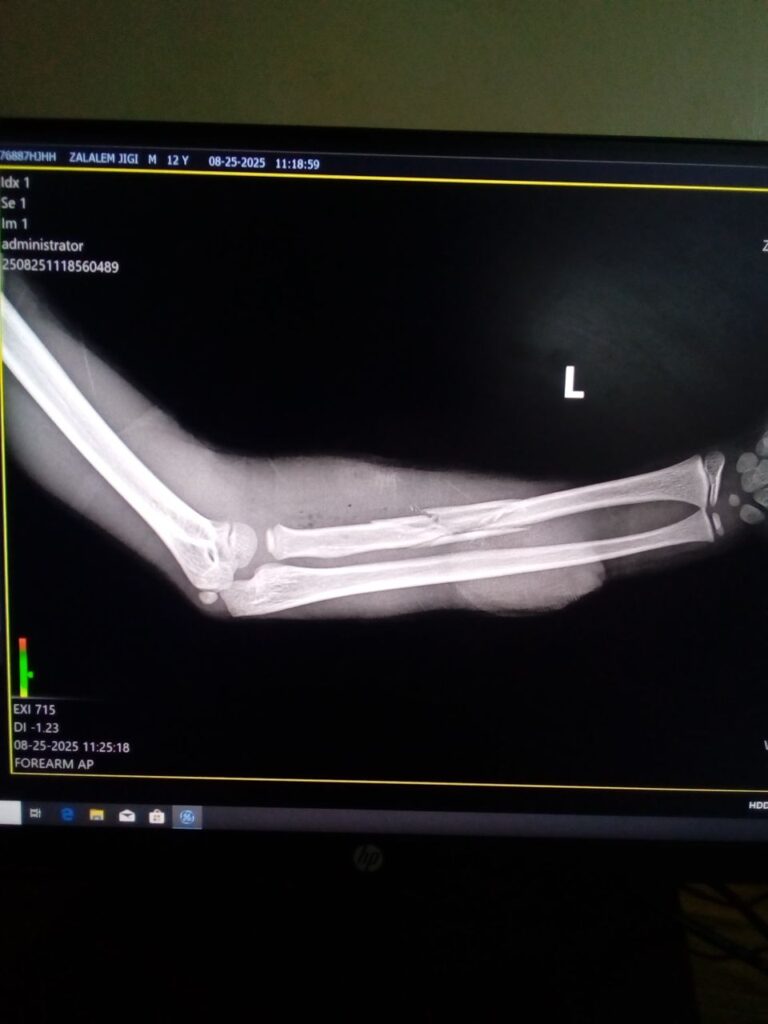
While herding livestock, Zelalem encountered a military explosive object. It detonated, shattering his left arm and plunging his family into panic. He was rushed to Nedjo Hospital for first aid, but the needed surgery costing 20,000 ETB was far beyond his family’s means. They returned home with nothing but hope and traditional remedies. For months, the boy endured the pain in silence, watching his hand grow stiff and nearly useless.
But word of Zelalem’s condition eventually reached a Child Protection Officer for an EU- Funded project called Resilience Inclusive Schooling in Ethiopia (RISE) in Nejo Town, which focuses on Education in Emergencies (EiE) and reinforcing resilience for children and communities. After a field assessment confirmed the severity of Zelanem’s case, the officer referred Zelalem to Geneva Global Ethiopia (GGE). Working closely with local authorities, GGE secured the support letters and permissions needed to quickly provide Zelalem the care he needed. Soon, he and his mother were on their way to Wollega University Referral Hospital with —transportation, accommodation, and medical expenses fully covered.
Doctors examined him, expecting a complicated fracture requiring surgery. Instead, the X‑ray revealed something astonishing: his bone had already healed naturally. The wound still needed care and the scars remained, but his arm was recovering far better than anyone expected. With coordinated support from GGE, the Women and Children Affairs Office, and Igu Kommis Primary School, Zelalem re‑enrolled in school on November 12, 2025. He arrived with a new school bag, notebooks, pencils, and the tentative yet wide smile of a child reclaiming something precious.
Today, Zelalem is catching up quickly. Teachers say he follows lessons attentively and his performance improves each week. His confidence, once dimmed by hardship, has begun to shine. During a recent class, he lifted his healed hand, tracing letters across his exercise book with steady strokes. When asked how he feels being back in school, his voice, soft but certain, carried a quiet triumph: “Now I can write again and go to school with my friends.”
Zelalem’s story is more than a tale of survival. It is a testament to what a functioning child protection system can achieve when community vigilance, committed professionals, and supportive organizations come together. In the hands of a child who almost lost everything, education is no longer just a hope, it is the future he is already writing. Across West Wollega and beyond, the EU‑funded initiative is making this future possible for children, transforming moments of crisis into pathways of recovery, reintegration, and renewed hope.