
International Mother Language Day serves as a day to honor what shapes our earliest understanding of the world. Language is more than a tool for communication, it is how culture is passed down, identity is shaped, and how communities stay connected. When children are encouraged to learn and express themselves in their mother tongue, they are not just better understood, they are seen.
This year we are proud to celebrate with our Speed School staff and facilitators in Ethiopia and Uganda who teach their classes using students’ mother languages. In education, language shapes students’ sense of inclusion and acceptance. Our intentional approach in encouraging students to communicate and learn in their local language strengthens their confidence, encourages participation with peers and community, and deepens understanding of their lessons and how these relate to their lives.
Uganda’s relationship with language in education is rooted in its colonial past, when English was institutionalized as the language of formal schooling. It was not only a medium of instruction but a marker of intelligence, modernity, and advancement. Local languages were largely confined to the home and community spaces, creating a hierarchy in which English became associated with power and opportunity, while indigenous languages were considered less suited for national progress. Even after independence in 1962, English remained dominant in formal education, shaping generations of students’ experiences in the classroom. It was not until the 1992 Government White Paper on Education that Uganda formally recognized the role of local languages in early primary instruction.
Rebecca Ecwou, the Country Director for Geneva Global Uganda, has seen firsthand how language policy shapes students’ experiences in the classroom.
In my time in the sector, I have witnessed a complete overhaul of the Ugandan curriculum, both in primary schools and primary teachers’ colleges. Back when I was a student in school, use of the local language in instruction was forbidden – a relic of Uganda’s colonial past.
When she began her career as a primary school teacher in 2001, Rebecca shared, the subject content that schools covered “did not align with the realities that existed within the Ugandan context.” This disconnect made it difficult for her students to relate to the lessons. Twenty-five years later, she leads the team implementing Geneva Global’s accelerated education “Speed School” program in which teachers use local language as the primary language of instruction. “Now that instruction in the local language is the norm, more children are able to understand the lessons and fewer students are being left behind.” Shedding those past colonial practices affirms children’s identities and roots learning in the realities of their communities. Both reinforce their learning and commitment to remain in school.
Rebecca’s experience points as well to a larger truth: for learning to be meaningful, it must be rooted in local contexts. Lessons should reflect students’ realities, their communities, environments, and the ways they already understand the world. This is a core principle of Geneva Global’s award-winning Learning for Life and Livelihoods (L3) approach, which centers relevance and local ownership in education systems. Language is foundational to that effort. Without instruction in a language children understand, even the most thoughtfully designed curriculum remains distant and largely inaccessible. To the contrary, when children learn in their mother tongue, education becomes immediate, real, tangible, and motivating, connecting students, their families, and their communities.
Ethiopia’s language history followed a different path but carried similar consequences. For much of the twentieth century, Amharic functioned as the dominant language of government and formal education across the country. During the Derg regime, non-Amharic languages in formal education was severely restricted. In 1995, Ethiopia’s new federal Constitution formally recognized the equality of all languages and empowered regional states to adopt their own languages as mediums of instruction in primary schools, reshaping curricula and classrooms to better reflect local identity and lived experience.
In West Wollega, Ethiopia, Debela Abdisa, Director of Abba Sena Primary School, emphasizes that children’s foundational understanding of the world begins in their mother tongue and that education is most effective when it builds on that foundation.
“Past experiences clearly show the consequences of excluding mother-tongue instruction,” Debela explains. “During the Derg regime , the use of non-native languages in classrooms created significant barriers, limiting students’ ability to express themselves and engage meaningfully with learning. As a result, many students struggled to fully grasp concepts or communicate their ideas.”
For Debela, the importance of mother-tongue education extends beyond comprehension. It is about cultural continuity and identity.
“Preserving mother-tongue languages is critical because language carries a community’s culture, history, and identity,” he says. “Today, students educated in their native language have grown up with a stronger sense of belonging and a clearer sense of self, free from the identity struggles that often come with linguistic displacement.“
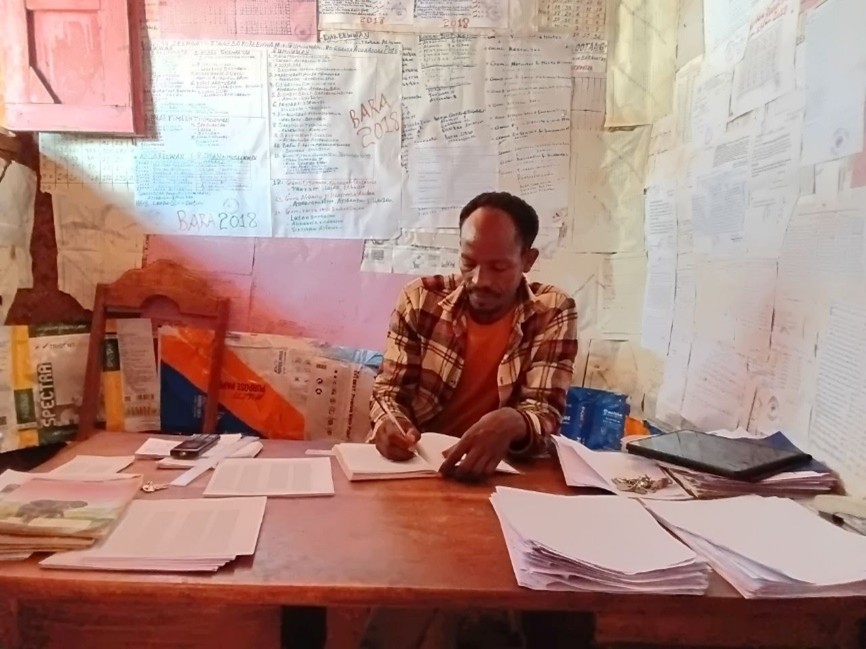
He points to a visible shift across generations. “Compared to previous generations, these students have grown up with a stronger sense of belonging and without the identity struggles that often arise from linguistic displacement. Learning their history and values in their own language has helped them develop a clear and confident sense of self.” For Debela, this is evidence that language policy does more than shape instruction, it shapes identity over time.
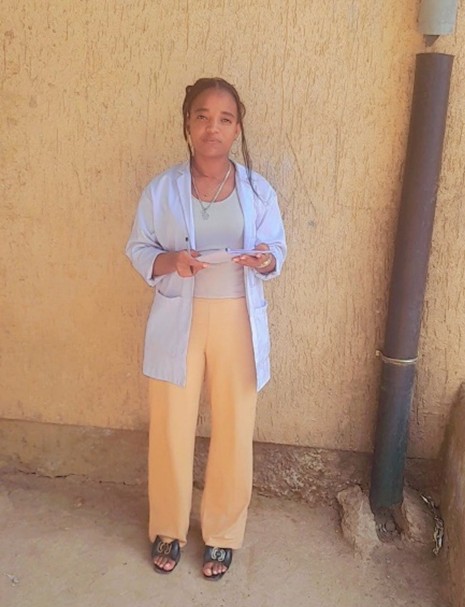
In the classroom, the impact of mother-tongue instruction is immediate and deeply personal. At Jemo No. 2 Primary School in Sheger City, Meti Buzeunech has spent five years as a Speed School facilitator, teaching in Afan Oromo. For Meti, using students’ mother tongue transforms the classroom experience.
“Teaching in Afan Oromo enables my students to understand lessons more easily, listen attentively, actively participate in discussions, and confidently ask questions,” she explains. Teaching in her student’s first language also strengthens her role as an educator, helping her build trust and meaningful connections with her students.
“Overall, teaching and learning in Afan Oromo plays a vital role in shaping knowledgeable, confident learners and contributing to responsible future citizens.”
As we celebrate International Mother Language Day, these stories from Uganda and Ethiopia remind us that language in education is never neutral. It can foster safety and inclusion or spread disconnection and exclusion. Maintaining mother-tongue instruction ensures that students are not forced to choose between academic success and their cultural heritage. Instead, their background becomes a source of strength: they are being taught that where they come from belongs in the classroom, too.