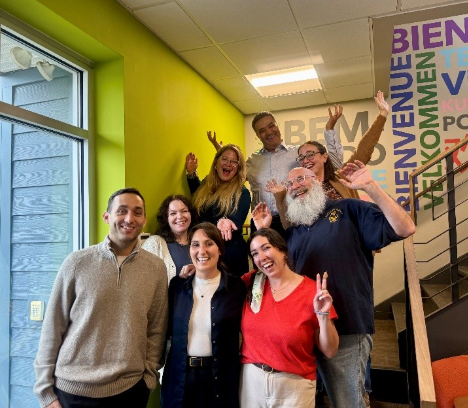
When I began my internship at Geneva Global a year ago, I did not know much about philanthropy and had never considered pursuing a career in the field long-term. From my experience, I thought global development – my target career – happened through governments and agencies and came from the machinery of federal funding. Philanthropy felt peripheral to this work, but this past year has changed that completely.
In the fall of 2024, during my third and final year at Temple University, I was accepted as an intern with a USAID contractor. It felt like the first step into the career I have been preparing for. As a Political Science and Global Studies major focused on global security, USAID had always been the north star, the institution every professor referenced, and every development model seemed to orbit.
After graduation, I continued on that trajectory, imagining a long-term future in the federal development pipeline. Then, almost overnight, that pipeline collapsed. When USAID shut down, the industry around it followed suit. My position disappeared and the path I had spent years building toward simply wasn’t there anymore.
For me, it felt like the entire field of international development was gone.
While searching for work in the aftermath, I came across an internship opening at Geneva Global supporting international development projects in Ethiopia and Uganda. It felt almost unreal that a position with international impact still existed when so much else had fallen apart. When I applied and got the role, I stepped into a world I had never seriously considered before: philanthropy.
Coming from federally-funded contracts, I was used to one-off, bureaucratic projects with long timelines and short impacts. But here it felt different. On the Design & Implementation Team, I watched a small group of people create meaningful change with remarkable agility. They built partnerships, tested ideas, adapted quickly, and held themselves to a standard of quality that inspired me. Their work on Speed School, a model for helping out-of-school children re-enter formal education, showed me how something can be both low-cost and high-impact while remaining sustainable and scalable. This was the work I dreamed of doing, in a place I never thought to look.
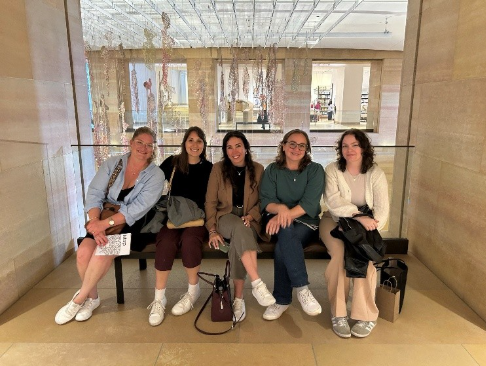
As an intern, I supported the Speed School program by writing external communications that highlighted student successes, coordinating information across our Ethiopia and Uganda teams, and preparing technical materials for teacher trainings and curriculum development. Along the way, I connected directly to the people and processes that make the program work. I was able to tell the stories of children who fought through conflict, poverty, and hopelessness to return to school, of mothers who jumped at the opportunity to become financially stable to support her children, and our own female staff who work every day to give girls opportunities they were not allowed to pursue as children.
My internship taught me that philanthropy fills critical gaps, especially in moments when government aid shifts or disappears along with its resources. Philanthropy connects people who want to give with people who know how to create change. It funds innovation that might never survive a federal approval process, and it sustains programs that communities rely on even when political winds shift. In today’s world, that flexibility has become an essential component to keeping an industry full of bright-eyed professionals looking to help the world alive.
For Speed School, that flexibility is exactly what helps the program to work as well as it does. It listens and responds to the unique needs of communities in a way other funding structures do not allow for because of drawn out bureaucratic processes or focuses on outputs rather than the actual impact on beneficiaries. Through continuous innovation and strong partnerships, the program can develop, sustain, and scale in ways that government-aid-funded programs cannot.
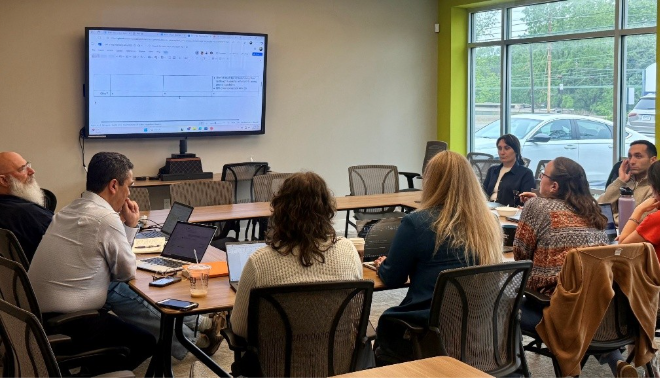
Learning how Speed School thrives under philanthropic support made me rethink what truly drives progress in global development, and it became clear that this model is just one example of how philanthropy sustains meaningful change when other systems fall short.
I see now that philanthropy can be the difference between progress and regression, the line between greater access to education, health, and safety, or slipping deeper into insecurity, hunger, and poverty. It has kept momentum alive when other systems stalled.
Ultimately, this internship provided an understanding of what meaningful global work can look like and I have developed a deep respect for a sector I once overlooked. Impact does not always require a massive public institution behind it. Sometimes it comes from small teams, smart ideas, and people who care to give their resources to a place that can do something great with them.
This realization, along with the skills I developed at Geneva Global, has reshaped not only my career path, but also my sense of what is possible in the industry. My experience during this internship broadened my perspective on my target career path and ultimately led me to pursue a full-time role in philanthropy at GMA Foundations. Through my exposure to both programming and grantmaking teams at Geneva Global, I gained a deeper understanding of how meaningful work gets done while opening doors to opportunities I would not have otherwise imagined.